





The European Broadcasting Union has announced what they are referring to as an “overhaul” of how voting is going to work at the Eurovision Song Contest. The changes were announced by Martin Green, Director of the Eurovision Song Contest, to make sure that “the fairness of the Contest is always protected…to ensure the Contest remains a celebration of music and unity.”
The highlights of the changes are…
- Updated rules to allow normal music promotion but discourage excessive campaigns, especially those backed by governments.
- Broadcasters and artists cannot participate in third-party campaigns that may influence voting, and violations will result in undisclosed sanctions.
- The maximum number of votes per payment method will drop from 20 to 10, and fans will be encouraged to support multiple entries.
- Professional juries will return to the Semi Finals, creating a 50/50 split between jury and public votes as in the Grand Final.
- The jury size will increase from 5 to 7, and juror backgrounds will expand to include more music-related professions, with at least two jurors aged 18–25.
- All jurors must sign a declaration promising to vote independently and impartially and to maintain careful social media behaviour before the Contest ends.
- The EBU will enhance technical security systems to detect and prevent fraudulent or coordinated voting and monitor suspicious patterns.
There is a lot here to unpack, and unpack we will, but let us make this clear early in the article.
These changes are necessary for the future of the Eurovision Song Contest. The Contest suffered reputational damage in the aftermath of Basel 2025. There were rightful questions about the integrity of the voting process to ensure the Contest was fair, transparent and not instrumentalised. These changes are an improvement in that regard.
If anything, we are not sure whether the proposed changes go far enough in minimising the risk of Eurovision voting being instrumentalised or perceived as unjust. Are they significant enough to keep member broadcasters in the Song Contest for the 70th edition in Vienna? These reforms, while steps in the right direction, may not necessarily be enough to instill the confidence we all need for the upcoming season.

EBU Headquarters in Geneva (Image: EBU)
Promotion Rules And Where Their Limits Lie
It is correct that the EBU is addressing how songs are promoted in the run-up to the Eurovision Song Contest. As the EBU’s Eurovision News Spotlight team pointed out in May, Israeli government agencies invested significantly in advertisements that were pushed across European social networks, clearly stating that one could vote twenty times for Israel at Eurovision in May.
This should not happen again. Broadcasters and artists are now “not permitted to actively engage in, facilitate or contribute to promotional campaigns by third parties that could influence the voting outcome”. The phrasing from the EBU states that delegations are being told that the EBU will “discourage disproportionate promotion campaigns”, as well as an explicit calling out of campaigns backed by government agency funding and coordination.
This is the right direction for the Song Contest to strengthen the integrity of the competition. What we are unsure of in reading this is how far this will go and whether it is sufficient to limit the risks of said campaigns. Is “discourage” a strong enough phrase? What is meant by “disproportionate”? Is this referring to the promotion of voting the maximum amount for just one artist, or is it about the size and scale of any investments made by any third party in promoting a certain act? The EBU statement refers to the point that “any attempts to unduly influence the results will lead to sanctions.” What sanctions are these and will they be sufficient to ensure this never happens in the future?
The EBU has made clear that some of this information will be contained in the Code of Conduct and the Voting Instructions documents. The Code of Conduct is a public document that all working with the Song Contest must sign and adhere to. The Voting Instructions have never been a public-facing document. According to the EBU’s internal Code of Ethics, the EBU “must operate with the utmost transparency” and its operations should “withstand the most rigorous standards of public scrutiny”. If essential details about how the limits on promotion will work in practice are held in these documents, they should be published by the EBU.
Without that clarity, we are not sure if these necessary regulations sufficiently protect the integrity of the Song Contest.

Advertising for Austria is all over the Press Centre in 2015 (Photo: Ben Robertson)
From Twenty Votes To Ten
The push to reduce the number of votes per payment method from 20 to 10 is a step in the right direction. There were numerous discussions following Basel (example 1, 2 and 3) suggesting there were those who voted twenty times for the eventual televote winner from Israel, and we are also aware of the advertising campaign from the Israeli Government Advertising Agency that explicitly mentioned this voting limit.
Some could argue that five votes per payment method would be more than sufficient for anybody to cast their vote, and for others in a family watching the show together to also vote for their favourite. However we also appreciate that voting is a source of income at the Eurovision Song Contest and that this aspect needs to be considered.
Perhaps the balance should be that there’s a maximum of ten votes per payment method, with a maximum of five votes per individual song. Rather than the vague phrasing stating that “fans will be actively encouraged to share their support across multiple entries”, we believe it would have been better to make this a technical solution, so those wanting to vote the maximum amount at the Song Contest are required to spread their support.

Junior Eurovision outlines how to cast your vote in 2018
The Return Of Juries In The Semi Finals
There are advantages to having juries return to the Eurovision Song Contest Semi Finals. Firstly, this ensures that the competitive landscape is the same for those qualifying for the Grand Final and those already pre-qualified, so there is no difference in the Contest scoring during the week. It also ensures a broader range of routes to qualification, which may help those not benefited by diaspora voting trends. It also ensures that the Grand Final, as the EBU statement says, has “the optimum musical balance” in the Grand Final.
The experiment with televote-only Semi Finals was done with good intentions, but the Song Contest needs to ensure high-quality entries have a route to succeed, and this provides that path to qualification that should give all broadcasters hope of making the Grand Final.
What we are interested in here is how that impacts the Contest as a whole. On average, we aren’t looking at large differences in the songs that qualify; usually, there is only one, perhaps two songs that would qualify in a 50/50 jury/televote split compared to a televote only show. However some of those songs that might make it to the Grand Final with jury support may also compete for higher jury scores in the Grand Final, and as such can make the jury voting sequence more competitive and varied, reducing the chance of the jury landslides that we have witnessed in recent editions.
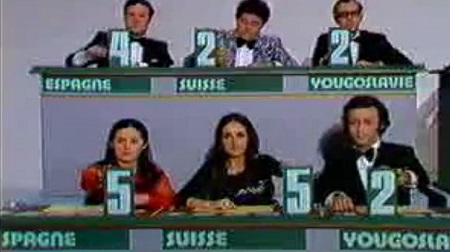
Eurovision Judges in-vision in 1973 (YouTube)
Larger Juries With Extra Diversity
As part of the efforts to increase the robustness of the jury vote, we at ESC Insight fully support the move to increase the number of jurors from five to seven, and to increase the diversity of musical backgrounds that can sit on a Eurovision jury. We have previously mentioned how we feel that some of Eurovision jurors’ musical criteria, in particular that of vocal capacity, have had too much emphasis in the decisions, which can be coupled with a juror selection process that has perhaps had too many singers and musicians on juries to get a suitable balance.
We also support the new requirement that two jurors be aged 18 to 25. The Eurovision Song Contest is a public service success story, in particular for how it engages young people, with reach percentages nearly four times that of regular Saturday night programming across the continent. Contrary to that, however, is the fact that Eurovision juries have an average age that usually sits around 40, a generation above one of the Contest’s most important target audiences.
We know from the way Sweden’s national selection, Melodifestivalen, works with age-range voting blocks that huge differences can divide an audience from young to old, and having younger music professionals as an integral part of the Song Contest jury voting should ensure that their input does not get lost in the jury voting output.
If there is a criticism here, it would be that while with a larger jury the EBU mandates an age range for some of the jurors, there is no gender minimum mandated, which would have also helped to ensure diversity on each and every jury.
One thing to note with a larger jury size is that jury scores between different juries may tend to be more similar in previous years. This may, contrary to the impact of juries in the Semi Finals, ensure that more jury douze points agree with one another and as such, the spread of total points across the jury vote should, in theory, be on average wider.
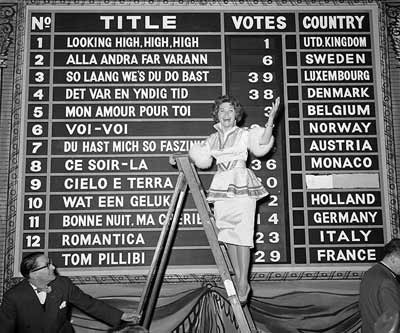
At least we weren’t doing all of the maths by hand
Trust In The Results Of The Public Vote
The EBU, together with voting partner Once, have plans in place to “expand the Contest’s advanced security systems”. These, they claim, will “prevent fraudulent or co-ordinated voting activity” and “strengthen monitoring of suspicious patterns” in the voting received.
We understand at ESC Insight that there is a limit to any details that can be publicly revealed about how voting can be protected. There are two concerns we have, and we would appreciate direct acknowledgement that the potential loopholes have been closed.
The first of them refers to the extended voting window, which for the Grand Final in 2024 and 2025 opened at the beginning of the show and closed long after the final song performed and we were subjected to numerous recaps. The problem with doing this is that it hugely increases the time available to coordinate mass voting for an entry and makes it very easy to advertise to those not watching the Contest when to vote for a certain song. With the traditional voting window available after all songs have performed, the time available for any voting campaigns to mobilise and shift the scoreboard in a certain direction is greatly reduced.
The other point that should be directly addressed is one ESC Insight brought to light in the aftermath of Basel 2025, the ability to vote quickly via the same device, the maximum number of times by simply changing payment method on the device. Reducing the number of votes per payment method from twenty to ten halves the efficiency of anybody wishing to vote more than ten times, but we are unsure if this statement and the processes of increased security implementation will, or will even attempt to, limit this attempt to block buy huge numbers of Eurovision votes.

Eurovision Song Contest Trophy 2018 (Thomas Hanses/EBU)
Will These Changes Be Enough To Save Eurovision?
The Eurovision Reference Group, the Contest’s governing body, has already approved these changes to the rules and regulations, and the plans are to implement them for the 2026 edition. What is happening is that these rules are also being brought onto the agenda of the wider EBU General Assembly. There, broadcasters can consider if these changes “are sufficient to meet their concerns” about the participation of Israeli broadcaster KAN, without calling for the promised vote on KAN’s participation.
Are these changes enough? The Irish broadcaster RTÉ has commented after this news that “Events in the Middle East are unfolding day by day” as well as stating that “the issue of participation…has been included on the agenda” of the EBU’s General Assembly meeting. That is not an indication that these steps are, at least for now, sufficient for the Irish broadcaster to reconsider its stance on boycotting the 70th edition of the Song Contest due to Israeli participation.

The host city United By Music
ESC Insight’s View: The Right Direction, But Not Far Enough
These changes by the EBU are welcome and necessary. The Song Contest had to ensure voting reform was a part of preparations for the 70th edition in Vienna, and the steps to increase jury size, limit promotional material, and reduced voting amount are measures that we all needed to regain more trust in the system. They are definitely steps in the right direction.
Whether they are enough is not for the EBU to answer.
Firstly, that decision now goes to broadcasters and delegations heading to the General Assembly in December. Will this be enough to stop a vote on participation there? And will it then be enough to stop countries withdrawing from the upcoming Song Contest?
As of today, we are not sure if this is enough.
It then has to be something that Eurovision’s fan community needs to believe and have confidence in. That confidence has been shaken in recent months, and the relationship the Song Contest has with its most loyal fans has suffered as a result. Many of these steps are positive ones the Song Contest needs, but do they go far enough for fans to be ambassadors for the Contest once more, proving to others that the EBU has done enough to make the Contest’s voting fairer than ever before? Does this demonstrate that the EBU can withstand the highest levels of public scrutiny required by its Code of Ethics? Does this actually make the Song Contest fair, with a robust voting system we can all believe in?
As of today, we are not sure if this is enough.
And ultimately, the only measure that counts will be the opinion of the world in May, when the general public engages with the Song Contest once more. Will these steps mitigate concerns about any campaigns and political voting, and once again bring the focus back to the songs and artists performing on stage?
As of today, we are not sure if this is enough.
In his open letter to the Eurovision community, Director of the Eurovision Song Contest Martin Green claims that “The Eurovision Song Contest belongs to all of us, and it must remain a place where music takes centre stage…[to] resist attempts to turn our stage into a place of geopolitical division”.
That vision of the future Eurovision Song Contest is one that we are sure everybody can sign up to. Whether these reforms will instil confidence for everybody is, today, an uncertain matter.